Dirty refrigerator coils make your fridge work harder and wear out faster. Here's how to clean them in 20 minutes — and why it's worth doing once a year.
Your refrigerator runs 24 hours a day, 365 days a year — and most homeowners have never once thought about what's happening behind or underneath it. That's not a criticism; the fridge just hums along in the background doing its job, and nothing about it invites attention until something goes wrong.
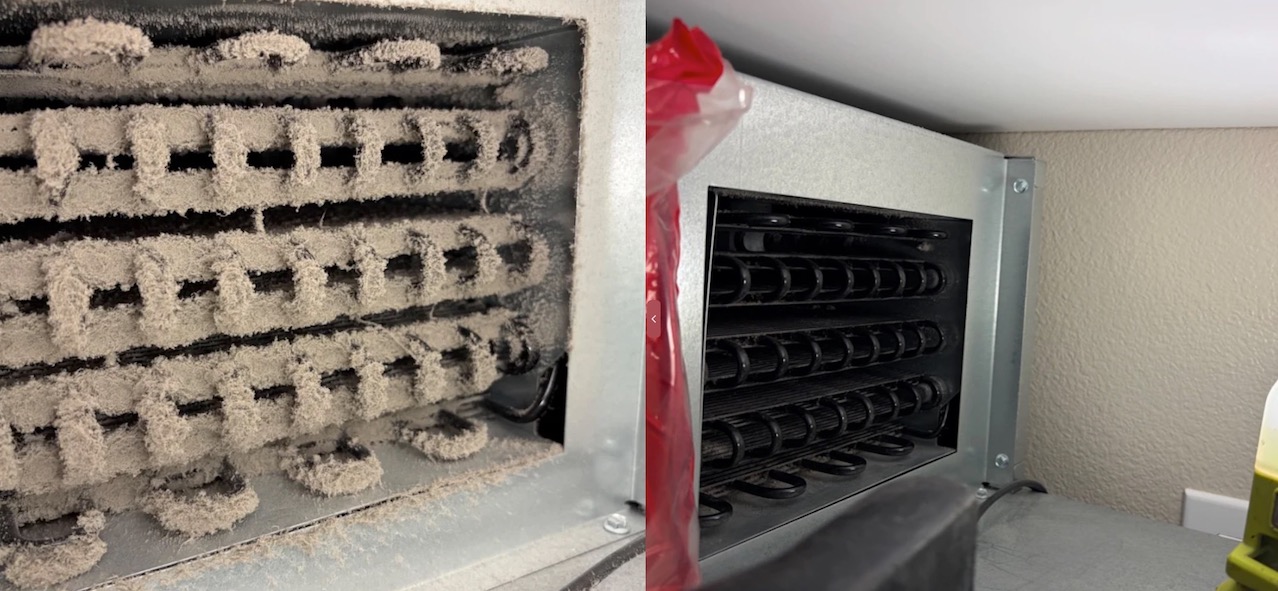
Here's what's actually happening back there: the condenser coils — a set of metal coils that release the heat your fridge pulls out of its interior — are quietly collecting dust, pet hair, and debris every single month. When those coils get coated, your fridge has to work harder to cool itself. The compressor runs longer, your energy bill creeps up, and the appliance wears out faster than it should.
The average refrigerator is designed to last 10–15 years. A fridge with dirty coils often underperforms and fails closer to the 8–10 year mark — sometimes sooner. Compressor replacements, when possible at all, can run $400–$600. A new fridge runs $1,000–$2,500.
Cleaning the coils once a year takes about 20 minutes and costs nothing. The math isn't complicated.
In warmer climates like San Diego — particularly in inland neighborhoods like Rancho Bernardo, Scripps Ranch, and Poway (ZIP codes 92128, 92131, 92064) where summer temperatures push into the 90s — refrigerators work harder than they do in cooler regions. That extra strain makes coil cleaning an even smarter annual habit.
A vacuum with a brush attachment or narrow crevice tool, a refrigerator coil brush (a long, flexible brush available at most hardware stores for about $10), and a flashlight. That's it.
Once a year is the standard recommendation for most households. If you have pets — especially dogs or cats that shed — every six months is smarter. Pet hair is the leading accelerant of coil buildup and compacts faster than regular household dust.
While the grille is off or the fridge is pulled out, check the door gaskets — the rubber seal around each door edge — for cracking or gaps. A worn gasket lets cold air escape continuously, forcing the compressor to work overtime just like dirty coils do. Test a gasket by closing the door on a piece of paper: if the paper slides out with no resistance, the seal is compromised and worth replacing.
For Livd members, refrigerator coil cleaning is exactly the kind of task that tends to land on the "someday" list and stay there for years. Our team handles it as part of routine appliance maintenance — no vacuum to dig out, no guessing which panel to remove, no moving a heavy appliance across your kitchen floor.
Already a Livd member? Add "refrigerator coil cleaning" to your task list in the Livd app and we'll take care of it on your next scheduled visit.
Not a Livd member yet? Schedule your free home walkthrough at livdhomes.com — we'll assess your appliances, flag what's overdue, and build a proactive maintenance plan for your home.