That chirp at 2am is usually a low battery — but not always. Here's how to read the chirp, test your smoke and CO detectors properly, and know when a detector has simply expired.
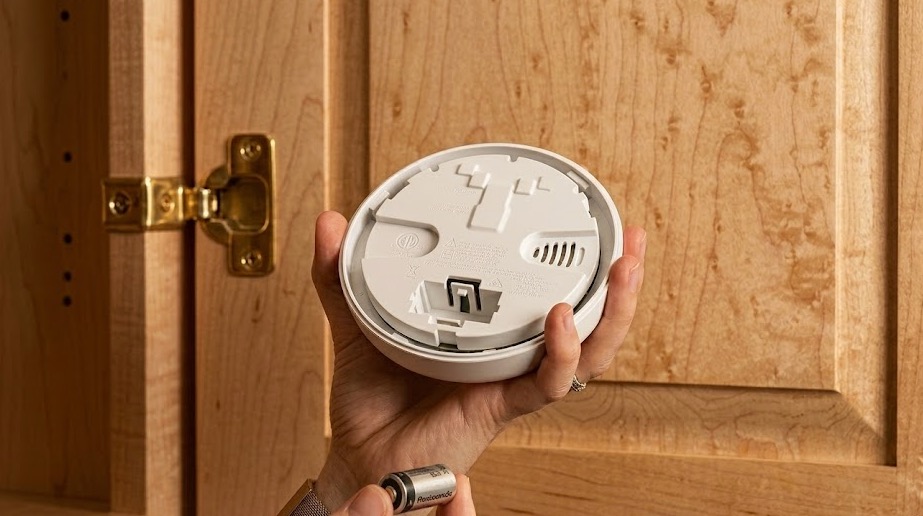
Somewhere on your ceiling right now, there's a detector that hasn't been touched since the day it was installed. It looks exactly like a working smoke or carbon monoxide alarm — but if you haven't tested it recently, you genuinely don't know if it is one. This is one of the most deferred safety tasks we see in homes across Del Sur, Carmel Valley, and Rancho Peñasquitos (92127, 92130, 92129) — not because families don't care, but because detectors are easy to forget when nothing seems wrong.
The problem is, a dead or expired detector offers zero protection. And it looks identical to a functioning one.
Smoke and carbon monoxide alarms are your family's first warning system. A working smoke detector gives you roughly three times longer to escape a house fire compared to no detector at all. CO detectors, meanwhile, guard against a gas that's colorless and odorless — you cannot detect a carbon monoxide leak without one.
Here's what most homeowners don't know: these devices have hard expiration dates. Smoke detectors are rated for 10 years from the manufacture date. CO detectors wear out even faster — most are rated for 5 to 7 years. After that, the sensors degrade and may not trigger reliably, no matter how many times you press the test button. The test button only checks the alert circuitry — not the actual sensing element.
If you moved into your home more than five years ago and haven't replaced your CO detectors, there's a real chance some of them are past their useful life right now.
Grab a step stool, go room to room, and run through steps 1 through 3. It takes less than five minutes, requires no tools, and gives you actual confirmation of whether your family is protected — not just the assumption that they are. Pay close attention to the manufacture dates. Most homeowners are genuinely surprised to find detectors that are 8, 10, or even 12 years old still mounted to the ceiling.
If any unit is past its expiration window or failing the button test, replace it before the week is out. Detectors are inexpensive — most quality smoke/CO combos run $25–$40 at any hardware store.
For Livd members, detector testing and replacement tracking is exactly the kind of task our team keeps an eye on. During visits, we note the age of your detectors, flag units approaching expiration, and replace them when the time comes — so you never have to wonder whether your home is covered.
We track it so you don't have to. That's the whole idea.
Already a Livd member? Add "smoke and CO detector check" to your task list in the Livd app and we'll take care of it on your next visit — including checking manufacture dates and flagging anything that needs replacing.
Not a Livd member yet? This is one of dozens of safety and maintenance tasks that's easy to defer and important not to. A Livd subscription means someone's actually tracking these things for your specific home — and handling them before they become a problem. Book your free home walkthrough at livdhomes.com and we'll build you a personalized maintenance plan to get started.