San Diego homeowners: discover how water leak sensors prevent costly water damage. Compare all leak detector types and find the right fit for your home.

Water damage is one of the most expensive — and most preventable — disasters a homeowner can face. A small, slow drip under the kitchen sink or a washing machine hose that finally gives out can cause thousands of dollars in damage before you ever notice a problem. The good news? A simple set of water leak sensors placed in the right spots around your home can catch a leak the moment it starts — often before any real damage occurs.
In this guide, we'll walk you through why water leak sensors are worth every penny, what types are available, and how to choose the right one for each area of your home. And if you'd rather have a professional handle the placement and setup, we're happy to take care of it for you during your next service visit.
According to insurance industry data, water damage and freezing claims are among the most frequent home insurance claims filed each year — surpassing theft and fire combined in many years. The average water damage claim runs between $10,000 and $15,000, and that's before factoring in mold remediation, which can push costs even higher if the leak goes undetected for days or weeks.
The frustrating part is that the most common sources aren't dramatic pipe bursts. They're slow, quiet leaks:
These leaks often go unnoticed for weeks. By the time you spot the water stain or smell the mildew, the damage is already done. Water leak sensors exist specifically to close that gap.
If you're in Rancho Bernardo, Carmel Valley, Rancho Penasquitos, Scripps Ranch, Poway, Sabre Springs, Carmel Mountain Ranch, or Torrey Highlands, you're likely living in a well-built suburban home — but that doesn't mean you're off the hook when it comes to water risk.
Many homes in these neighborhoods were built in the late '80s through early 2000s, which means water supply lines, washing machine hoses, and ice maker connections are anywhere from 20 to 40 years old. Temperature swings between hot summers and cooler winter nights put steady stress on those older braided and plastic supply lines. And because these homes tend to have larger footprints — with multiple bathrooms, laundry rooms, and kitchen appliances — there are simply more points of failure.
The bottom line: water damage doesn't announce itself. A sensor under your sink or behind your fridge is the easiest way to make sure a slow drip doesn't turn into a very expensive problem.
Consumer-grade water leak sensors are refreshingly simple devices. Most consist of a small probe or pad with two metal contacts. When water bridges those contacts, it completes a circuit — and the sensor triggers an alarm. Depending on the model, that alarm might be:
You don't need a plumber or an electrician to install most of them. You place the sensor where water might pool, plug it in or insert batteries, and you're protected. That simplicity is a big part of their appeal.
Not all water leak detectors are built the same. The right choice depends on where you're placing it, how you want to be notified, and whether you want the protection to be passive (alert only) or active (alert plus shutoff). Here's a breakdown of the main types.
Best for: Under sinks, behind fridges, under washing machines, near water heaters
These are the most affordable and most common type. A standalone spot sensor is a small, puck-shaped device that sits on the floor and sounds a local alarm when it detects moisture. Most run on AA or AAA batteries and last one to two years between changes.
Pros: Very affordable (often $10–$25 per unit), no hub or Wi-Fi required, dead simple to set up
Cons: You have to be home to hear the alarm, no remote notification
Good brands to look at: Govee, Zircon, LESHP
Best for: Homeowners who travel frequently or want remote monitoring
Smart water leak sensors connect to your home Wi-Fi network and send push notifications directly to your smartphone when moisture is detected — even if you're nowhere near home. Many also integrate with smart home platforms like Amazon Alexa, Apple HomeKit, or Google Home, letting you build automations around leak events.
Pros: Remote alerts, app history, smart home integration, some models include temperature and humidity monitoring
Cons: Require Wi-Fi and a smartphone, slightly more expensive ($25–$60 per unit), may rely on a cloud service
Good brands to look at: Govee (Wi-Fi models), Moen Flo Smart Sensor, Aqara, Eve Water Guard
Best for: Water heaters, sump pump pits, behind refrigerators, under large appliances where a single-point sensor might miss a leak
Instead of a single contact point, rope and cable sensors use a flexible sensing cable — sometimes several feet long — that you coil around the perimeter of an appliance or along a wall. Any moisture anywhere along the cable triggers the alarm.
Pros: Much wider detection area than a spot sensor, ideal for large or awkward spaces
Cons: More expensive than spot sensors ($30–$80), slightly more setup involved
Good brands to look at: Water Alert, LeakSmart, Dorlen
Best for: Homeowners who already have a smart home system or want centralized monitoring across the whole house
Hub-based systems work with dedicated smart home hubs — SmartThings, Hubitat, Z-Wave, Zigbee — or a brand-specific hub. Individual sensors connect wirelessly to the hub, which manages alerts, automations, and device history from a single app. These are a great choice if you want to protect multiple areas of the home under one roof.
Pros: Centralized control, easy to scale to many sensors, reliable mesh-network connectivity, no cloud dependency in some systems
Cons: Requires purchasing a compatible hub, higher upfront investment
Good brands to look at: SmartThings (Samsung), Zigbee-compatible sensors, Honeywell
Best for: Homeowners who want maximum protection and the ability to stop a leak even when no one is home
These are the most advanced consumer-grade water leak sensors available. Automatic shutoff systems combine sensors with a motorized valve that installs on your main water supply line. When a sensor anywhere in the home detects moisture, the system automatically closes the valve — stopping water flow to the entire house within seconds.
Pros: The most complete protection available, can prevent catastrophic damage from a burst pipe or appliance failure
Cons: Professional installation typically required for the valve, significantly higher cost ($200–$700+)
Good brands to look at: Moen Flo, Phyn Plus, LeakSmart
The most common — and highest-risk — locations in a typical home are:
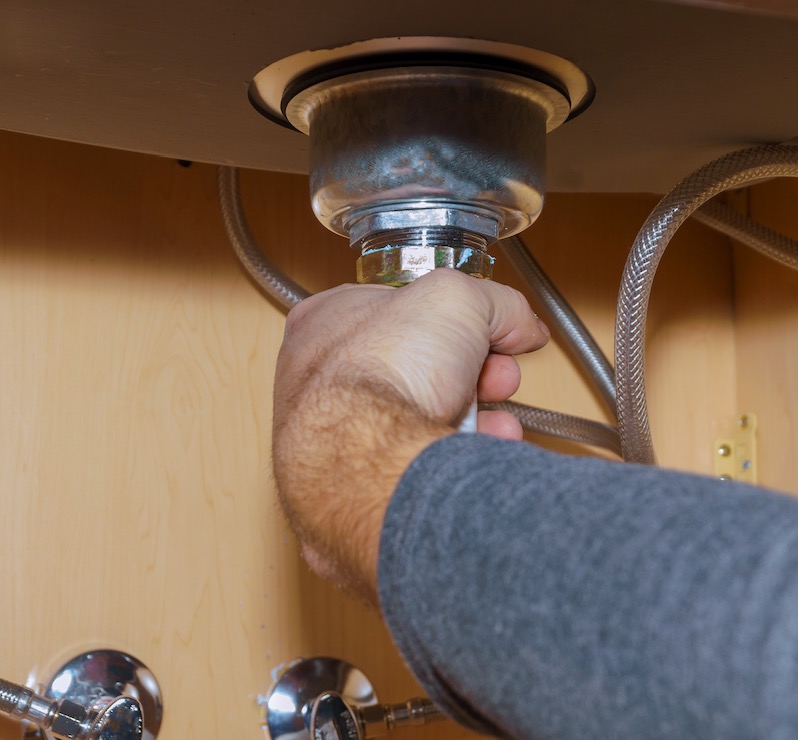
Under the kitchen sink. Supply lines for the hot and cold water, plus the drain P-trap, are all potential failure points. A sensor placed flat on the cabinet floor catches any drips immediately.
Under the refrigerator / behind the fridge. If your refrigerator has a water dispenser or ice maker, it has a water supply line. These lines are notorious for slow drips that go completely unnoticed for months.
Under or beside the washing machine. Both the water inlet hoses and the drain hose are common failure points, especially on machines that are several years old. A rope sensor coiled around the base is ideal here.
Near the water heater. Tank water heaters eventually corrode from the inside out. A sensor placed at the base catches early signs of failure before the tank lets go.
Under bathroom sinks. Same logic as the kitchen — supply lines and drain connections are always at risk.
Basement and sump pump pit. If your home has a basement, a sensor near the sump pump can warn you if the pump fails during heavy rain.
A reasonable starter setup for most homes is four to six spot sensors — one under each sink, one behind the fridge, and one near the water heater — at a total cost of under $100.
With so many options on the market, here are the features worth paying attention to:
Alert method. If you're home most of the time, a local alarm may be plenty. If you travel or are frequently away, a Wi-Fi model with app notifications is worth the extra cost.
Battery life vs. wired power. Battery-powered sensors are easier to place but require periodic maintenance. Some plug-in models never need a battery change.
Response time. Check specs for how quickly the sensor triggers after detecting water. Most good models respond in under 60 seconds.
Temperature monitoring. Some smart sensors also monitor ambient temperature — useful for catching freezing conditions in crawl spaces or unheated rooms that might lead to pipe bursts.
Smart home compatibility. If you're invested in a particular ecosystem (Apple HomeKit, Amazon Alexa, Google Home, SmartThings), look for a sensor that integrates natively rather than one that operates as an island.
Water leak sensors aren't glamorous. They sit quietly on the floor under your sink and do nothing — until the one day you really, really need them. For most homeowners, a basic set of spot sensors is one of the best low-cost, high-return investments you can make in your home. If you travel often, step up to Wi-Fi–connected smart sensors. And if you want true peace of mind, an automatic shutoff system is the gold standard.
The cost of a leak detector is measured in dollars. The cost of the water damage it prevents is measured in thousands.
If setting up water leak sensors has been sitting on your mental to-do list, here's the easiest way to get it done: add it as a task in the Livd app, and we'll take care of it during your next scheduled visit.
Your handyman will identify the highest-risk spots in your home, place the sensors correctly, test each one, and make sure everything is working before they leave. It takes around 20-30 minutes as part of a regular visit, and it's the kind of small task that's easy to keep putting off — until you really wish you hadn't.
Don't have a Livd subscription yet? Schedule a free home walkthrough, and take a breather from home maintenance this year.