A noisy, jerky garage door usually just needs the right lubricant in the right spots. Here's exactly what to lube, what to skip, and why WD-40 doesn't cut it.
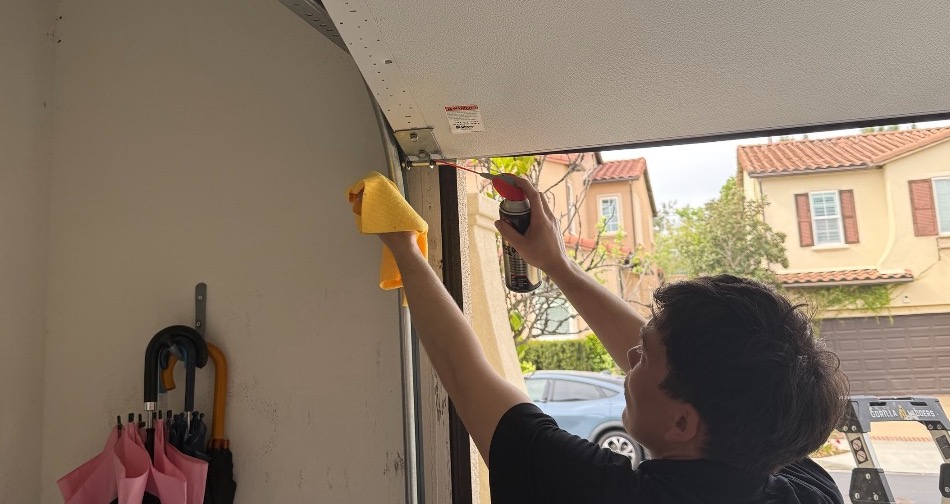
If your garage door groans, squeals or shudders every time it opens, the whole house probably knows when you're leaving. The good news is that most of that noise comes from metal parts that are simply dry.
Your garage door is the largest moving object in your home, and it cycles open and closed thousands of times a year. Lubricating it twice a year keeps it running quietly and smoothly, with less strain on the opener. It takes about 20 minutes.
Dry rollers, hinges and bearings create friction. Friction makes noise, but it also wears parts out and forces the opener motor to work harder. Many opener failures start with a door that has become stiff and heavy to move.
San Diego's dry, dusty air (and the Santa Ana winds that blow grit into every gap) make this worth doing on a schedule, especially in inland neighborhoods like 4S Ranch, Del Sur and Poway (92127, 92064).
A white lithium grease spray or silicone-based garage door lubricant (3-IN-ONE Garage Door Lube is a good one, at Home Depot or Amazon), microfiber cloths, a stepladder and safety glasses.
Skip regular WD-40, heavy grease on the tracks and oil-based products. They attract dirt, gum up over time and can degrade the rubber seals.
Garage door springs and the cables attached to them are under enormous tension. Never loosen, adjust or remove them. That's a job for a garage door technician.
Every six months is the standard. If your garage door is your main entrance and opens several times a day, consider every three to four months.
Test the auto-reverse safety feature: place a roll of paper towels on the floor in the door's path and close it. The door should reverse as soon as it touches. Also check that the photo-eye sensors at the base of the tracks are clean and aligned. If the door still sounds rough after lubrication, hangs unevenly or a spring looks gapped, call a garage door pro.
And if other doors in the house are squeaking too, our guide on fixing a squeaky door hinge takes less than 10 minutes.
Garage door lubrication is a perfect example of a small task that saves a bigger repair later. For Livd members, your dedicated handyman lubricates the door twice a year as part of your proactive maintenance plan, checks the seals and lets you know if anything needs a specialist.
Already a Livd member? Add "lubricate garage door" to your task list in the Livd app and we'll take care of it on your next scheduled visit.
Not a Livd member yet? Schedule your free home walkthrough at livdhomes.com. We'll look at what your home needs and build a proactive maintenance plan to keep the little things from becoming big ones.